

Oxalic acid, a dicarboxylic acid with the formula C₂H₂O₄, is a well - known chemical compound that has a wide range of industrial and household applications. As a supplier of oxalic acid, I have witnessed its diverse uses, from metal cleaning to textile processing. However, it's crucial to understand the effects of oxalic acid on water quality, as improper disposal can lead to significant environmental consequences.
Solubility and Dissociation in Water
Oxalic acid is highly soluble in water. When it dissolves, it undergoes a two - step dissociation process. The first dissociation step is:
[H_2C_2O_4\rightleftharpoons HC_2O_4^-+H^+]
And the second step is:
[HC_2O_4^-\rightleftharpoons C_2O_4^{2 - }+H^+]
This dissociation releases hydrogen ions ((H^+)) into the water, which can lower the pH of the water body. A decrease in pH makes the water more acidic. Acidic water can have detrimental effects on aquatic life. For example, many fish species are sensitive to changes in pH. A significant drop in pH can damage their gills, disrupt their osmoregulation, and even lead to death. In addition, acidic water can also corrode pipes and other infrastructure in water treatment and distribution systems.
Complexation with Metal Ions
One of the most important chemical properties of oxalic acid is its ability to form complexes with metal ions. Oxalate ions ((C_2O_4^{2 - })) can bind to metal ions such as calcium ((Ca^{2+})), iron ((Fe^{3+})), and magnesium ((Mg^{2+})). For instance, the reaction between calcium ions and oxalate ions forms calcium oxalate ((CaC_2O_4)) precipitate:
[Ca^{2+}+C_2O_4^{2 - }\rightleftharpoons CaC_2O_4\downarrow]
This complexation can have both positive and negative impacts on water quality. On one hand, it can be used in water treatment to remove metal ions from water. For example, in some industrial wastewater treatment processes, oxalic acid can be added to precipitate heavy metal ions, thus reducing their concentration in the water. On the other hand, the formation of precipitates can cause problems. If large amounts of calcium oxalate precipitate are formed in water pipes or water treatment equipment, it can lead to blockages and reduce the efficiency of the system.
Biological Degradation and Oxygen Demand
Oxalic acid can be degraded by some microorganisms in water. During the degradation process, microorganisms use oxalic acid as a carbon source and consume oxygen. This increases the biochemical oxygen demand (BOD) of the water. High BOD levels mean that there is a large amount of organic matter (in this case, oxalic acid) being decomposed in the water, which consumes a significant amount of dissolved oxygen. When the dissolved oxygen level in water drops below a certain threshold, it can lead to anoxic conditions. Anoxic water is harmful to aerobic aquatic organisms, such as fish and many invertebrates, as they rely on dissolved oxygen for respiration.
Impact on Aquatic Ecosystems
The presence of oxalic acid in water can disrupt the balance of aquatic ecosystems. As mentioned earlier, changes in pH and dissolved oxygen levels can directly affect the survival and reproduction of aquatic organisms. In addition, the complexation of oxalic acid with metal ions can also have indirect effects. Some metal ions are essential nutrients for aquatic plants and microorganisms. If oxalic acid binds to these metal ions and removes them from the water, it can limit the growth of these organisms. This, in turn, can affect the entire food chain in the aquatic ecosystem. For example, a decrease in the growth of phytoplankton, which are the primary producers in aquatic ecosystems, can lead to a reduction in the food supply for zooplankton and other higher - level consumers.
Applications of Oxalic Acid and Water Quality Considerations
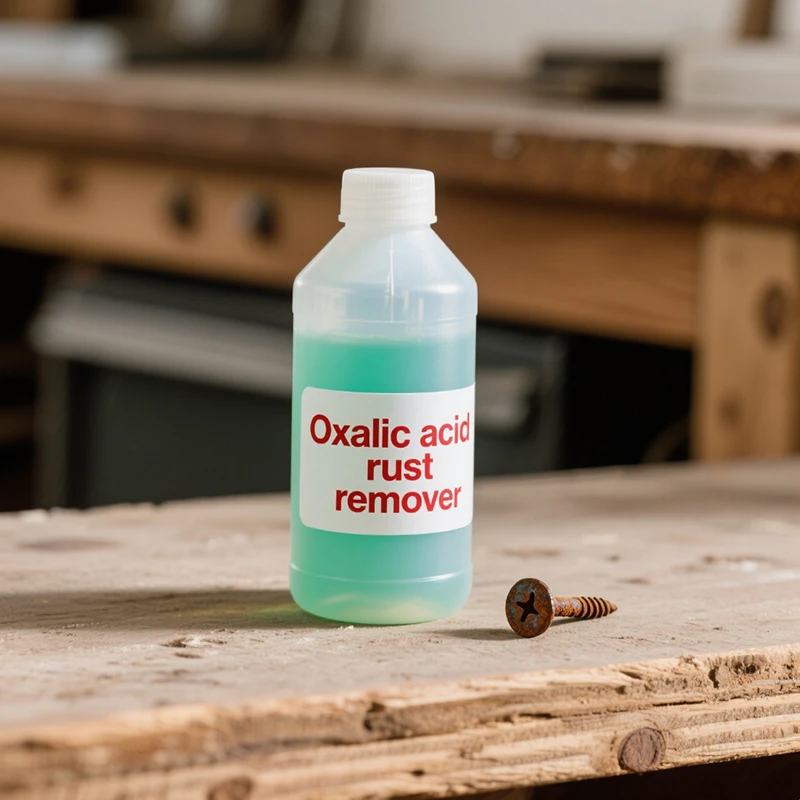
In various industries, oxalic acid is widely used. In the textile industry, it is used for bleaching and dyeing processes. In the metal industry, it is used for metal cleaning and surface treatment. In households, Oxalic Acid Cleaner is a popular product for removing stains. When using oxalic acid in these applications, it is essential to manage its disposal properly. Industrial wastewater containing oxalic acid should be treated before being discharged into water bodies. This can involve processes such as neutralization to adjust the pH, precipitation to remove metal - oxalate complexes, and biological treatment to reduce the BOD.
Our Oxalic Acid Products and Environmental Responsibility
As an oxalic acid supplier, we offer high - quality products such as Oxalic Acid 25kg and Oxalic Acid Sigma. We are committed to promoting the proper use and disposal of oxalic acid. We provide technical support to our customers to ensure that they use oxalic acid in an environmentally friendly way. We also encourage our customers to follow relevant environmental regulations when dealing with oxalic acid - containing wastewater.
Conclusion
Oxalic acid has a significant impact on water quality. Its solubility, complexation with metal ions, and biological degradation all play important roles in determining the chemical and biological properties of water. While it has many useful applications, it is essential to be aware of its potential environmental risks. By understanding the effects of oxalic acid on water quality, we can take appropriate measures to minimize its negative impacts.
If you are interested in purchasing our oxalic acid products or have any questions about their use and environmental impact, please feel free to contact us for further discussion and procurement negotiation.

References
- Stumm, W., & Morgan, J. J. (1996). Aquatic Chemistry: Chemical Equilibria and Rates in Natural Waters. Wiley - Interscience.
- Schwarzenbach, R. P., Gschwend, P. M., & Imboden, D. M. (2003). Environmental Organic Chemistry. Wiley - Interscience.
- Eaton, A. D., Clesceri, L. S., & Greenberg, A. E. (Eds.). (2005). Standard Methods for the Examination of Water and Wastewater. American Public Health Association.