

Pronouncing "passivant" correctly is essential, especially if you're involved in the industry where this term is frequently used. As a supplier of passivant products, I've encountered numerous customers who are unsure about the right way to say it. In this blog, I'll guide you through the correct pronunciation of "passivant" and also touch on some related aspects of our passivant offerings.
The Correct Pronunciation of "Passivant"
The word "passivant" is pronounced as /ˈpæsɪvənt/. Let's break it down phonetically to understand it better. The first syllable "pas" is pronounced like the "pas" in "passport," with a short "a" sound as in "cat." The second syllable "si" is pronounced with a short "i" sound, similar to the "i" in "sit." The third syllable "vant" rhymes with "rant." So, when you put it all together, it flows smoothly as /ˈpæsɪvənt/.
Why is it important to pronounce it correctly? Well, in a business context, clear communication is key. When you're discussing passivant products with colleagues, customers, or suppliers, using the correct pronunciation helps avoid misunderstandings. It also shows that you're knowledgeable and professional in your field.
What is Passivant?
Before we delve further, let's briefly understand what passivant is. Passivant is a chemical compound used in the process of passivation. Passivation is a technique used to protect metal surfaces from corrosion and oxidation. By applying a passivant, a thin, protective layer is formed on the metal surface, preventing it from reacting with the surrounding environment.
As a passivant supplier, we offer a wide range of passivant products to meet different industry needs. Our products are known for their high quality and effectiveness in providing long - lasting protection to metal surfaces.
Our Passivant Products
We have several popular passivant products in our inventory. One of them is Passivant 25kg. This product is suitable for general passivation applications. It comes in a convenient 25 - kg packaging, which is ideal for small to medium - scale operations. It has been formulated to provide excellent corrosion resistance and is easy to use.
Another product is Trivalent Blue Passivation 25kg. Trivalent blue passivation is a specific type of passivation process that results in a blue - tinted protective layer on the metal surface. This not only provides protection but also gives the metal an aesthetically pleasing appearance. Our trivalent blue passivation product in 25 - kg packaging is a favorite among customers who are looking for both functionality and visual appeal.
We also offer Passivation Zinc 25kg. Zinc passivation is crucial for protecting zinc - coated metals. Our passivation zinc product is designed to enhance the corrosion resistance of zinc - coated surfaces, ensuring their longevity and performance.
Tips for Using Passivant
When using passivant, it's important to follow the correct procedures to achieve the best results. First, make sure the metal surface is clean and free of any contaminants such as dirt, oil, or rust. This can be done through proper cleaning and pre - treatment processes.
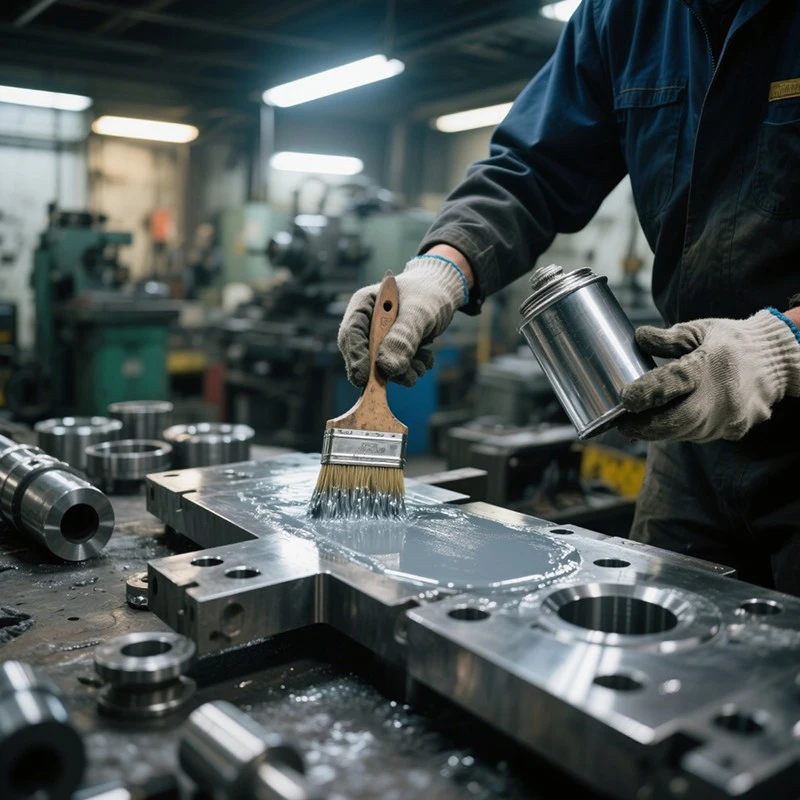

Next, carefully measure the amount of passivant required according to the size and nature of the metal surface. Follow the recommended application method, which may include dipping, spraying, or brushing. After application, allow the passivant to dry and form a protective layer. This may take some time, depending on the product and environmental conditions.
Industry Applications of Passivant
Passivant has a wide range of applications across various industries. In the automotive industry, it is used to protect metal components from corrosion, ensuring the durability and safety of vehicles. In the construction industry, passivant is applied to metal structures such as bridges and buildings to prevent rust and extend their lifespan.
The electronics industry also benefits from passivant. It is used to protect metal parts in electronic devices, preventing corrosion that could lead to malfunctions. In the manufacturing of household appliances, passivant helps keep metal surfaces looking new and functioning properly for a longer time.
Quality Assurance
As a passivant supplier, we take quality assurance very seriously. Our products are manufactured in state - of - the - art facilities using the latest technology and strict quality control measures. We conduct regular tests on our passivant products to ensure they meet or exceed industry standards.
We also provide technical support to our customers. If you have any questions about the pronunciation of "passivant," the use of our products, or any other related issues, our team of experts is always ready to assist you.
Conclusion
Pronouncing "passivant" correctly is just the first step in understanding and working with these important chemical compounds. As a passivant supplier, we are committed to providing high - quality products and excellent customer service. Whether you're a small business or a large corporation, our passivant products can meet your needs.
If you're interested in purchasing our passivant products or have any questions about them, we encourage you to reach out to us for a procurement discussion. We look forward to working with you and helping you find the best passivant solutions for your business.
References
- "Corrosion Science and Engineering" textbooks
- Industry reports on metal passivation processes