

As a supplier of succinic acid, I've always been intrigued by the behavior of this versatile compound in the environment. Succinic acid, also known as butanedioic acid, is a dicarboxylic acid that has a wide range of applications in industries such as food, pharmaceuticals, and chemicals. Understanding how it degrades in the environment is not only crucial for environmental protection but also for ensuring the sustainable use of this valuable resource.
Chemical Structure and Properties of Succinic Acid
Succinic acid has the chemical formula C₄H₆O₄ and a molecular weight of 118.09 g/mol. Its structure consists of a four - carbon chain with carboxylic acid groups at both ends. This structure gives succinic acid certain physical and chemical properties that influence its environmental fate. It is a white, odorless crystalline solid that is soluble in water, ethanol, and ether.
Degradation Pathways in the Environment
Biodegradation
One of the primary ways succinic acid degrades in the environment is through biodegradation. Microorganisms play a vital role in this process. Bacteria and fungi can utilize succinic acid as a carbon source for their growth and metabolism. In aerobic environments, bacteria such as Pseudomonas and Acinetobacter species are known to be capable of degrading succinic acid.
The aerobic biodegradation of succinic acid typically involves a series of enzymatic reactions. First, succinic acid is transported into the microbial cell. Inside the cell, it enters the tricarboxylic acid (TCA) cycle, also known as the Krebs cycle. In the TCA cycle, succinic acid is oxidized to fumaric acid by the enzyme succinate dehydrogenase. Fumaric acid is then further metabolized through a series of reactions, ultimately leading to the production of carbon dioxide and water.
In anaerobic environments, the biodegradation process is different. Anaerobic bacteria, such as some species of Clostridium, can also degrade succinic acid. Anaerobic biodegradation often results in the production of methane and other reduced compounds. The process is more complex and slower compared to aerobic biodegradation because of the limited availability of oxygen as an electron acceptor.
Photodegradation
Photodegradation is another possible degradation pathway for succinic acid in the environment, especially in surface waters and the atmosphere. However, succinic acid has relatively low absorption in the ultraviolet - visible region of the electromagnetic spectrum, which means that direct photolysis is not a significant degradation mechanism under normal environmental conditions.
Indirect photodegradation, on the other hand, may occur in the presence of photosensitizers. Photosensitizers are substances that can absorb light and transfer the energy to succinic acid, initiating its degradation. For example, in natural waters, humic substances can act as photosensitizers. When humic substances absorb sunlight, they can generate reactive oxygen species such as hydroxyl radicals (·OH). These hydroxyl radicals are highly reactive and can react with succinic acid, leading to its degradation.
Hydrolysis
Hydrolysis is the reaction of a compound with water. Succinic acid is relatively stable against hydrolysis under normal environmental pH conditions. However, in strongly acidic or basic environments, hydrolysis can occur. In acidic conditions, the carboxylic acid groups of succinic acid may undergo protonation and subsequent reactions. In basic conditions, the carboxylate anions of succinic acid can react with water molecules. But the rate of hydrolysis is generally slow compared to biodegradation in most natural environments.
Factors Affecting the Degradation of Succinic Acid
Environmental Conditions
Temperature is an important factor affecting the degradation of succinic acid. Higher temperatures generally increase the rate of biodegradation because they enhance the metabolic activity of microorganisms. For example, in tropical regions with warmer temperatures, the biodegradation of succinic acid in soil and water is likely to be faster than in colder regions.
pH also plays a crucial role. Most microorganisms involved in the biodegradation of succinic acid prefer a near - neutral pH environment. Extreme pH values can inhibit the growth and activity of these microorganisms, thereby reducing the rate of biodegradation. In addition, the pH can also affect the chemical reactions involved in photodegradation and hydrolysis.
Concentration of Succinic Acid
The concentration of succinic acid in the environment can influence its degradation rate. At low concentrations, microorganisms may be able to efficiently utilize succinic acid as a carbon source. However, at high concentrations, succinic acid may be toxic to some microorganisms, inhibiting their growth and reducing the biodegradation rate.

Presence of Other Substances
The presence of other substances in the environment can either promote or inhibit the degradation of succinic acid. For example, the presence of nutrients such as nitrogen and phosphorus can enhance the growth of microorganisms, thereby increasing the rate of biodegradation. On the other hand, the presence of toxic substances such as heavy metals or pesticides can inhibit the activity of microorganisms and slow down the degradation process.
Environmental Impact of Succinic Acid Degradation
The degradation of succinic acid in the environment generally has a positive impact. As it degrades into carbon dioxide and water through aerobic biodegradation, it contributes to the natural carbon cycle. This means that succinic acid is a relatively environmentally friendly compound compared to some other synthetic chemicals.
However, in anaerobic degradation, the production of methane is a concern. Methane is a potent greenhouse gas, and its release into the atmosphere can contribute to global warming. Therefore, in some cases, it is important to manage the anaerobic degradation of succinic acid to minimize methane emissions.
Our Role as a Succinic Acid Supplier
As a supplier of succinic acid, we are committed to promoting the sustainable use of this compound. We ensure that our products meet high - quality standards and are produced in an environmentally friendly manner. We also provide information to our customers about the environmental fate of succinic acid, including its degradation pathways.
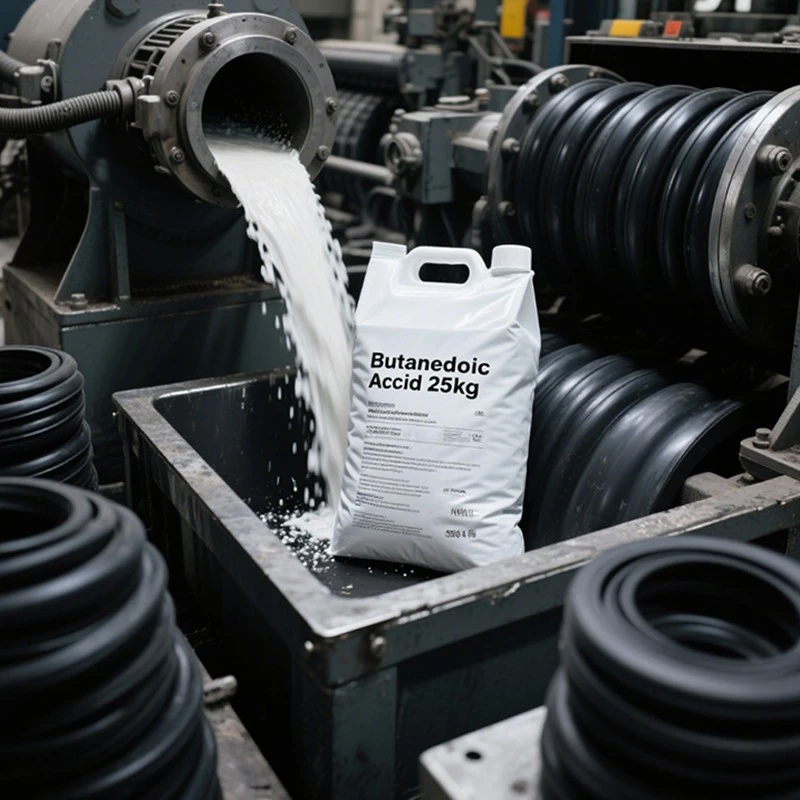
If you are interested in purchasing succinic acid, we offer a variety of products. You can check out Succinic Acid Sigma and Butanedioic Acid 25kg on our website. Our team is always ready to discuss your specific requirements and provide you with the best solutions. Whether you are in the food industry, pharmaceuticals, or other sectors, we can offer you the right succinic acid products. Contact us for more information and to start a procurement negotiation.
References
- Alexander, M. (1999). Biodegradation and Bioremediation. Academic Press.
- Schwarzenbach, R. P., Gschwend, P. M., & Imboden, D. M. (2003). Environmental Organic Chemistry. Wiley - Interscience.
- Stumm, W., & Morgan, J. J. (1996). Aquatic Chemistry: Chemical Equilibria and Rates in Natural Waters. Wiley - Interscience.